Pokemon
Logan Paul’s PSA 10 CoroCoro Pikachu Chase Explained: Why This May Be the Most Difficult Pokémon Grade Ever Attempted
Key Takeaways
- Logan Paul’s latest CoroCoro documentary highlights one of the most difficult grading challenges in the Pokémon hobby: producing a PSA 10 glossy CoroCoro Pikachu from an original 1996 magazine insert.
- The biggest obstacle isn’t rarity—it’s condition. Peeling a nearly 30-year-old card without introducing defects is extraordinarily difficult.
- Success could renew interest in early CoroCoro promos, but collectors should separate historical significance from short-term market hype.
- The video also shines a spotlight on why CoroCoro Comic remains one of the most important publications in Pokémon TCG history.
Logan Paul Isn’t Chasing Just Another Pokémon Card
Logan Paul’s latest Pokémon documentary isn’t simply about spending millions of dollars.
Instead, it’s about attempting something many collectors consider nearly impossible: creating what could become the world’s first PSA 10 glossy CoroCoro Pikachu peeled directly from an original 1996 magazine insert.
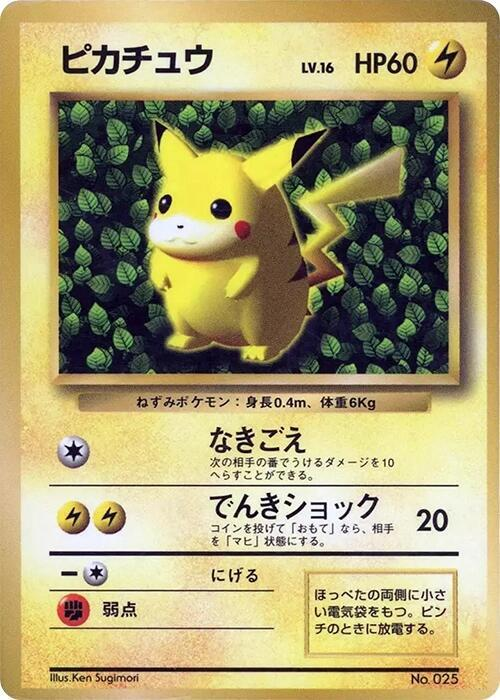 A Pokémon trading card featuring Pikachu, with a gold border and a green leaf background. It displays Pikachu's stats, including level 16 and HP 60, along with two attack moves: Nuzzle and Thunder Shock.
Throughout the video, Logan documents months of research, failed attempts, expensive acquisitions, and countless lessons about one of Pokémon’s most historically significant releases.
Rather than simply buying the highest-grade example available, he’s attempting to manufacture perfection from an item that has spent almost three decades attached to paper.
That distinction is what makes this project unique.
Why CoroCoro Comic Matters
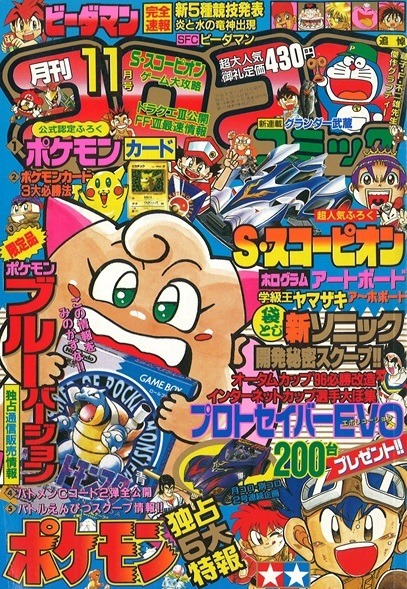 A colorful magazine cover featuring various anime characters and video game references, including a prominent character with large eyes and a smile holding a video game, surrounded by images of Pokémon, racing vehicles, and promotional text.
CoroCoro 223
A colorful magazine cover featuring various anime characters and video game references, including a prominent character with large eyes and a smile holding a video game, surrounded by images of Pokémon, racing vehicles, and promotional text.
CoroCoro 223
Long before Pokémon cards were sold in booster packs around the world, CoroCoro Comic helped introduce many Japanese fans to the franchise.
The monthly manga magazine distributed some of Pokémon’s earliest promotional cards through peelable inserts attached directly to magazine pages.
Unlike modern promotional cards that arrive individually packaged, these early cards remained bonded to magazine sheets until collectors carefully peeled them away.
That distribution method created an unusual problem.
Every collector had to decide between:
- Leaving the sheet untouched.
- Peeling the card and risking permanent damage.
Nearly thirty years later, that decision continues to affect the hobby.
The Real Challenge Isn’t Finding the Cards
Many viewers assume rarity is the biggest obstacle.
It isn’t.
The biggest challenge is preserving condition.
Glossy CoroCoro promos are notoriously difficult to grade because multiple variables can affect the final result before the card even reaches a grading company.
These include:
- Surface scratches from peeling
- Adhesive residue
- Factory print defects
- Centering issues
- Corner wear
- Aging from decades inside magazines
- Minor bends created during removal
Even collectors using careful techniques often discover flaws that are invisible until the card is examined under magnification.
This explains why Logan’s early attempts received disappointing grades despite appearing clean to the naked eye.
Why Peeling Is So Risky
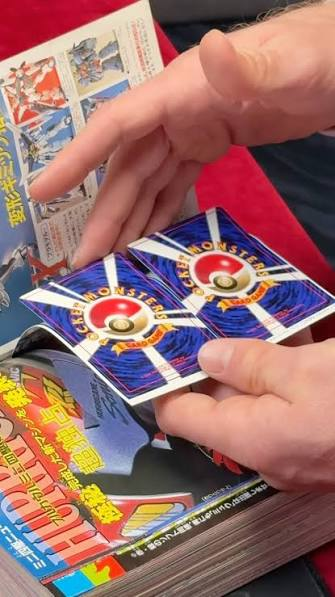 Two collectible trading cards featuring a colorful design with a Poké Ball icon, held in hands above a stack of magazines.
Unlike opening a sealed booster pack, peeling a CoroCoro promo is irreversible.
Once removed, there is no second chance.
If the card develops:
- A surface scratch
- Paper lift
- Corner stress
- Print damage
the opportunity for a Gem Mint grade may disappear permanently.
This creates an unusual collector dilemma.
Should an untouched magazine remain preserved as a historical artifact?
Or should it be sacrificed in pursuit of a potentially perfect card?
There is no universally correct answer.
The Collector’s Dilemma
One of the most interesting themes from Logan’s project isn’t the grading itself.
It’s preservation versus perfection.
Historically, many collectors preferred leaving magazines intact because unopened examples became increasingly scarce over time.
Others believed the real collectible was always the card itself.
Logan’s project illustrates the tension between these philosophies.
Each magazine opened reduces the surviving population of untouched examples while simultaneously creating another opportunity for a high-grade card.
In a hobby where scarcity drives collector interest, both outcomes have historical significance.
Building “Peel Camp”
One of the video’s most fascinating segments follows Logan’s systematic approach to improving his peeling technique.
After receiving disappointing grades on his first attempts, he realizes that success isn’t about luck—it’s about developing a repeatable process.
Rather than immediately attempting another valuable sheet, Logan practices on duplicate CoroCoro inserts until he refines a method that minimizes stress on the card.
His approach consists of three key steps:
- Cut the edges of the magazine insert to create more leverage and reduce unnecessary tension while handling the sheet.
- Find a naturally loose edge and use it as an anchor point instead of forcing the peel from a tightly bonded section.
- Slowly peel the card away using steady, controlled pressure, avoiding sudden movements that could introduce surface scratches, corner stress, or paper lift.
By treating the process more like conservation than card opening, Logan dramatically improves his technique and eventually succeeds in peeling difficult cards such as Lilypad Mew and Grey Star Jigglypuff.
The segment illustrates an often-overlooked reality of high-end Pokémon collecting: experience and preparation can be just as valuable as the collectible itself. When a single mistake can permanently affect a card’s condition, developing a disciplined process becomes part of the investment.
The Economics of Chasing Perfection
Perhaps the most interesting aspect of the project is that it doesn’t guarantee a financial return.
Every peel represents risk.
A flawless result could become historically significant.
A single mistake could permanently reduce both condition and market appeal.
That uncertainty is what makes projects like this so compelling.
Collectors aren’t simply buying rarity.
They’re investing in possibility.
Could This Change the CoroCoro Market?
Whenever a major influencer shines a spotlight on an overlooked area of the hobby, increased attention usually follows.
However, collectors should avoid assuming every CoroCoro card will suddenly become more valuable.
Several factors will determine whether interest becomes sustainable:
- Historical significance
- Collector demand
- Population reports
- Availability
- Liquidity
- Long-term cultural importance
Cards with strong historical narratives and genuine collector demand are generally better positioned than items experiencing only temporary hype.
Whether Logan’s project creates a lasting market shift remains to be seen.
Why This Story Is Bigger Than Logan Paul
Although Logan Paul is the face of the documentary, the real story is the remarkable history of CoroCoro Comic and the fragile cards it introduced to the Pokémon world nearly three decades ago.
His pursuit reminds collectors that rarity alone doesn’t define greatness.
Condition, provenance, preservation, and historical context all contribute to why certain collectibles become legendary.
Regardless of whether the final peel achieves a PSA 10, the project has already succeeded in bringing renewed attention to one of the most fascinating chapters in Pokémon TCG history.
Final Thoughts
Logan Paul’s CoroCoro journey isn’t simply about chasing another expensive Pokémon card.
It’s a case study in how history, scarcity, risk, and collector psychology intersect.
As more collectors revisit early Japanese promos, understanding why these cards matter will be far more valuable than simply knowing how much they sell for.
For long-term collectors, CoroCoro’s legacy extends well beyond one iconic Pikachu—it represents the earliest foundations of the Pokémon Trading Card Game itself.
Disclaimer
This article is intended for educational and historical purposes. Market conditions, grading populations, and collectible values change over time. Collectors should conduct independent research before making purchasing or investment decisions.